I am interested in web design, which puts me in the slightly awkward position of being excited about something that might eventually compete with me. Generative AI can write code, suggest layouts, and produce images. I am still figuring out why a perfectly reasonable CSS change has moved everything except the thing I wanted to move.
So, for this post, I put this prompt into ChatGPT:
I am a student interested in a career in web design and development. What are three practical benefits of generative AI in this field, and what are three ethical challenges involving clients, users, or my own learning? Give a concise answer in about 150 words with concrete examples.
Its response suggested faster coding, creative assistance, and help with debugging and learning. It also warned about client privacy, inaccurate or inaccessible work, and becoming dependent on generated code. The part that stood out was its reminder that developers remain responsible for testing their work.
Well. This was not the takeover that I had in mind. Apparently, I still have responsibilities.
I can see the appeal. Asking for an explanation when I am stuck could save me from spending an afternoon arguing with a browser. Comparing several layouts could help me find an idea I actually want to develop. These are useful opportunities, especially for someone still learning. But getting working code and understanding why it works are separate achievements. If I cannot explain or repair what I deliver, the convenience has become somebody else’s future problem.
The response’s accessibility suggestion also deserves checking. A website can look good while being difficult to use with a keyboard or screen reader. Calling an AI suggestion an improvement does not establish that it helps the people who need it. I would have to test it. That surprised me less than how easily the answer made all these tasks sound manageable. A short list leaves out the time and judgment required to do them well.
Privacy is another issue I could easily overlook while trying to solve something quickly. A client’s information might make a prompt more useful, but it also belongs to someone who trusted me with it. I should get permission before sharing confidential material and understand how the service handles it. The same care applies to generated images or designs: I need to consider permission, originality, and whether I am being clear about how the work was made.
Our class discussion made me wonder how much of AI development amounts to fixing the car while driving it. Improvements are welcome. I would still prefer the brakes to work before we begin congratulating ourselves on the speed. That is why I think companies should explain limitations clearly and test products carefully before releasing them. Consumers should be able to understand what they are agreeing to without needing an additional AI to translate the warning.
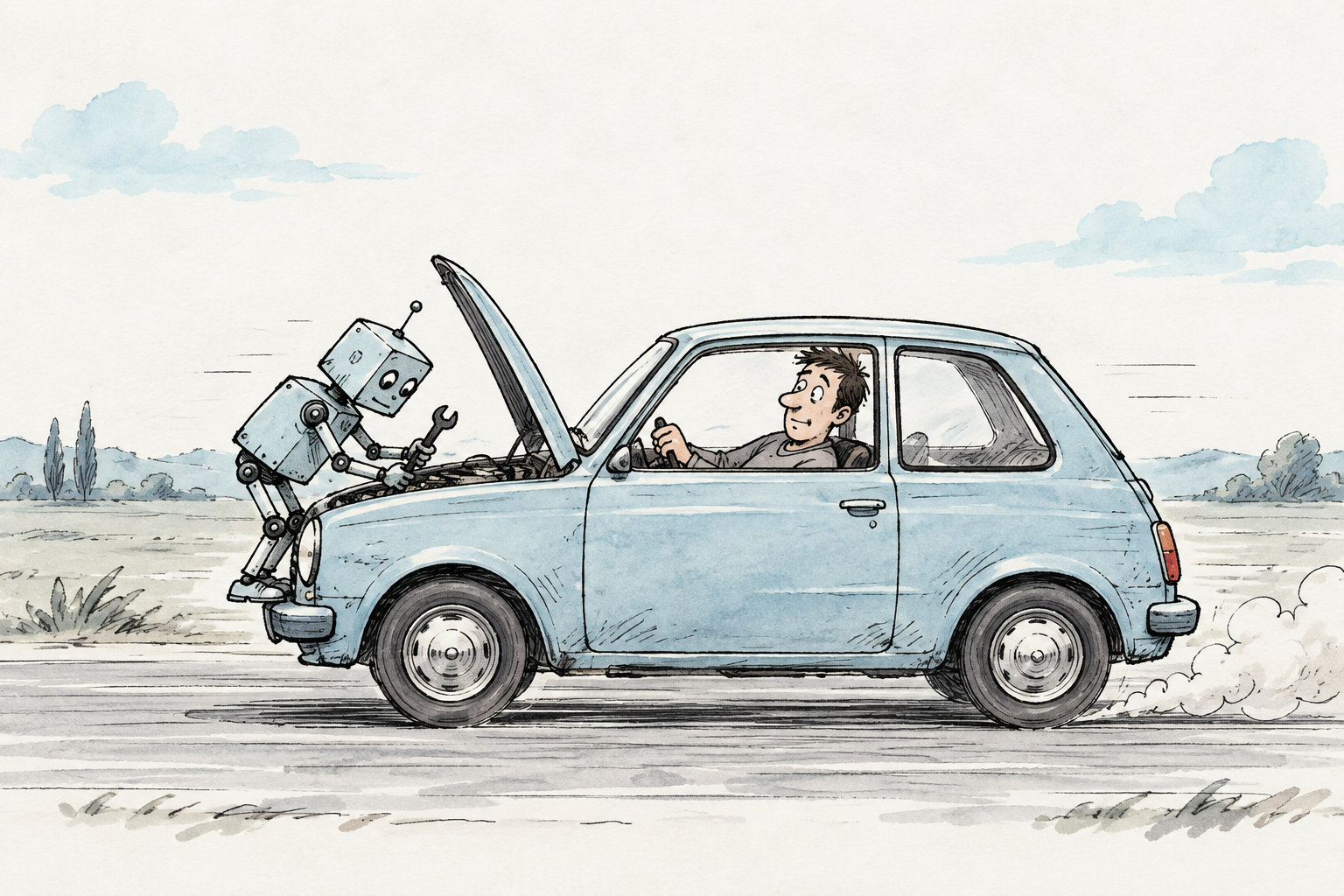
Ideally, companies would take that responsibility seriously themselves. Still, hoping they will is a weak protection for everyone affected. UNESCO’s guidance on generative AI in education emphasizes privacy, human agency, and evaluating whether tools are suitable. I think government has a role in setting basic protections and requiring accountability. Those rules should address specific harms and leave room for useful experimentation.
The question about schoolwork is already practical. Pew’s January 2025 report found that 26% of teens had used ChatGPT for schoolwork in its 2024 survey, up from 13% in 2023. What matters to me is what that help does. An explanation can support learning. An answer submitted without understanding it can make the assignment look finished while leaving the learning unfinished.
I want AI to help me become better at making things. I also want to remain capable of deciding whether those things are any good. That means checking its answers, following class or client rules, and being honest about its contribution. Maybe the takeover won’t be so bad. I would just like to keep knowing how to fix the website when it leaves.
#GenerativeAI #AIEthics #WebDesign


Leave a Reply